“UPWARDS Summer Program” Held for U.S. and Japanese students to learn semiconductor and AI chip development
Promoting the next generation of semiconductor talent through hands-on training with RISC-V microprocessors and C2RTL, international exchange, and Japanese cultural experiences.
| Program Period | Venue | Participants |
|---|---|---|
| August 21-28, 2026 | Ookayama Campus at Institute of Science Tokyo | 9 participants in total, coming from 3 U.S. universities & Institute of Science Tokyo |
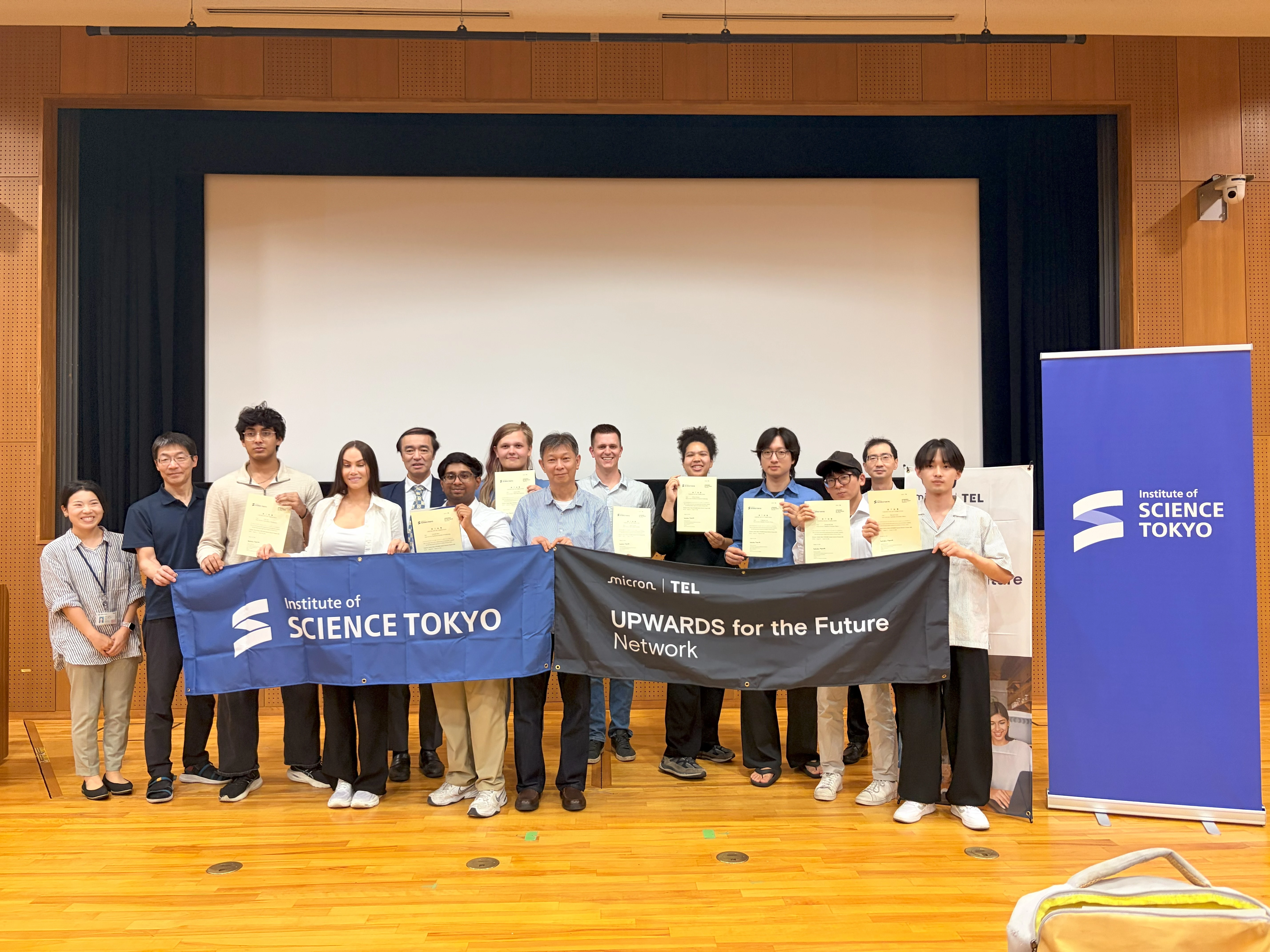
Institute of Science Tokyo (Science Tokyo) conducted the “UPWARDS Summer Intensive Program 2026" at its Ookayama Campus from August 21 to August 28. The program brought together 9 participants in total: two from each of the participating UPWARDS member universities (Boise State University, Rochester Institute of Technology, and the University of Washington) and three from Science Tokyo. Participants took part in hands-on experiential learning in the development of microprocessors and AI chips.
Program Start: Orientation, Lectures & International Exchange
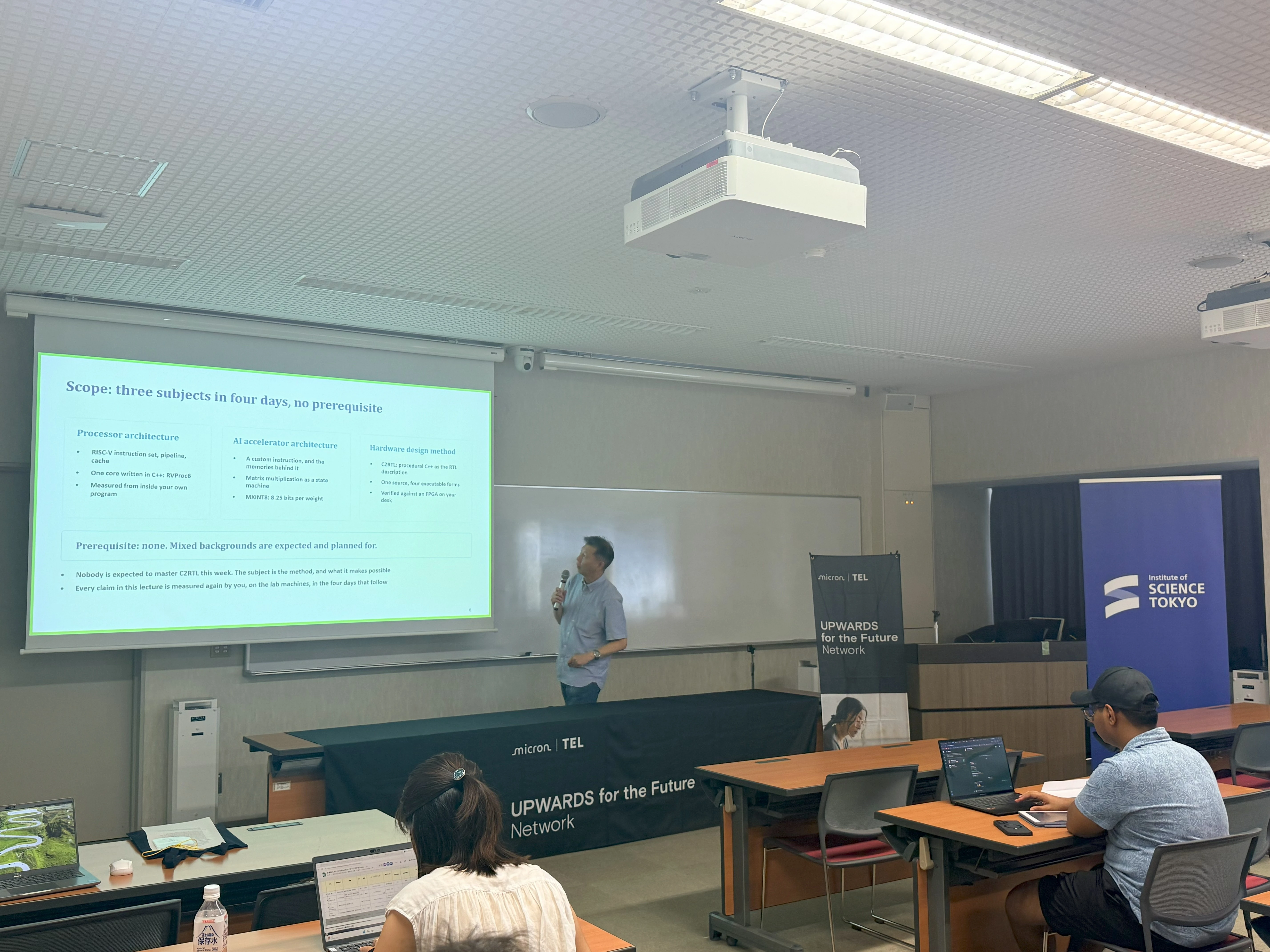
On August 21, the first day of the program commenced with an orientation outlining the overview and schedule. Subsequently, Professor Tsuyoshi Isshiki from the Department of Information and Communications Engineering delivered a lecture introducing microprocessor technologies and recent research developments in semiconductors. A lively Q&A session followed, during which participants actively discussed technical terminology and background concepts relevant to the hands-on sessions.
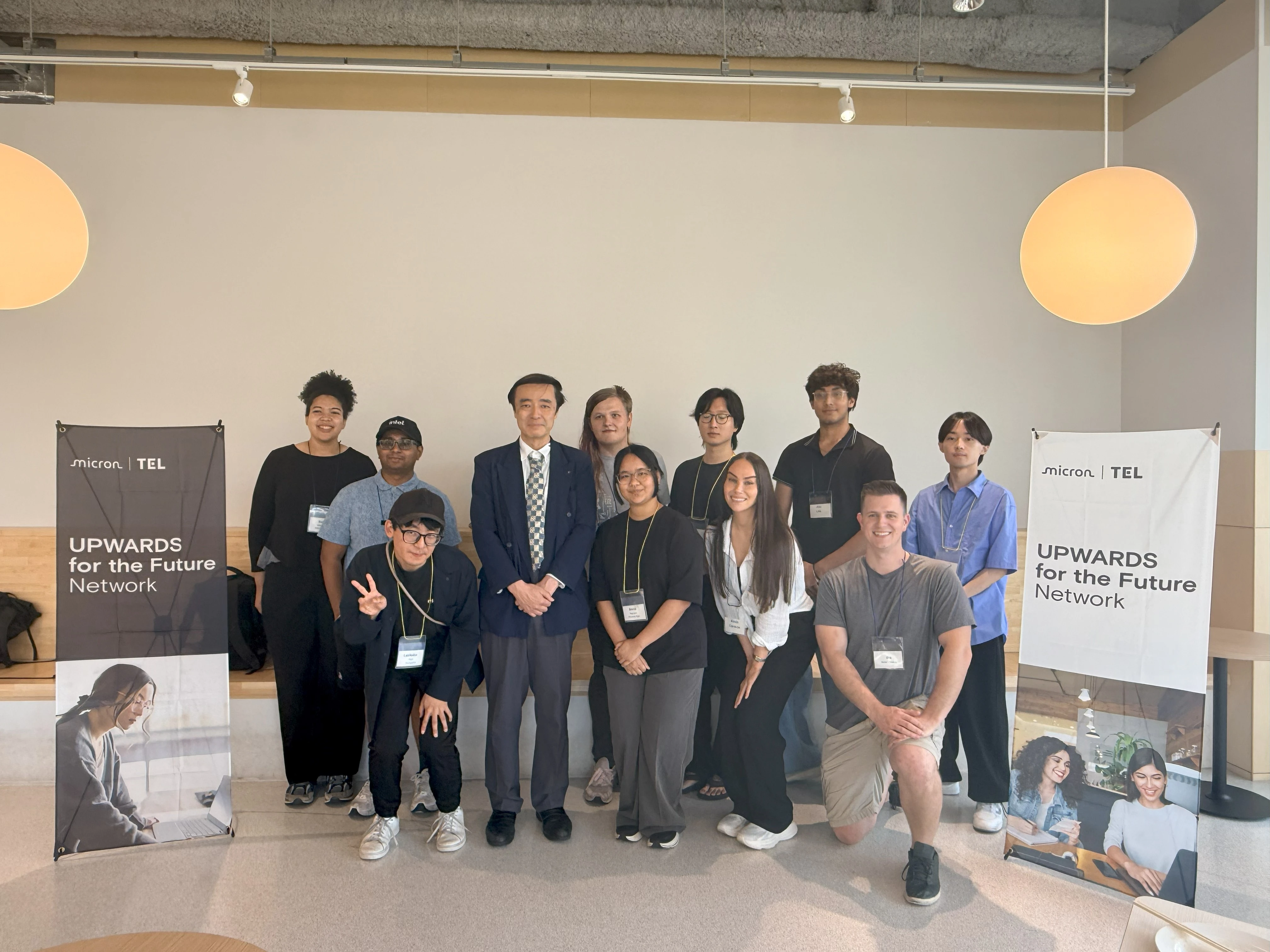
After the lecture, a welcome reception took place at Tsubame Terrace. The casual setting provided participants from various universities and academic disciplines an opportunity to interact and get to know each other better.
Hands-On AI Chip Development with RISC-V and C2RTL
Participating students engaged in AI application development utilizing RISC-V microprocessors and explored both basic and advanced concepts of AI chip design using C2RTL, a hardware-software co-design platform developed by Science Tokyo. During the open-ended project phase, participants were split into three teams of three to work on topics aligned with their respective interests and technical proficiency.
Learning Beyond Technology: Immersive Japanese Cultural Experiences
In addition to the hands-on technical sessions, a tea ceremony experience was organized at Houan tea house in Kamakura to enhance the students' appreciation of traditional Japanese culture and values. Held as a "Summer Tea Ceremony," the event centered on the theme of "water," inviting participants to experience ryo (coolness) with all five senses through carefully curated hospitality.
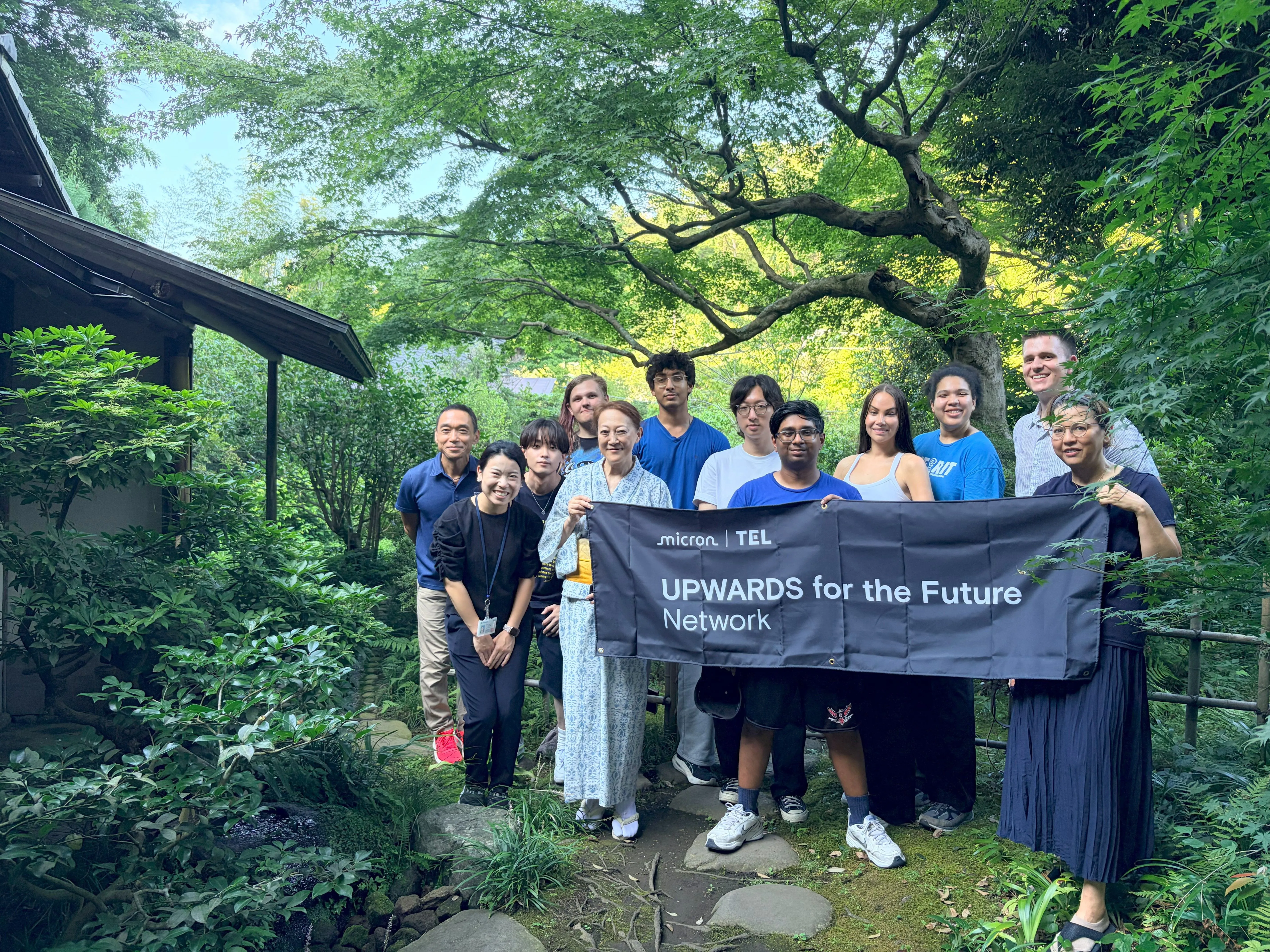
From a hanging scroll featuring a waterfall and tea bowls crafted around themes of water and summer, to the serene sounds of water, individual seasonal flower arrangements, and the warmth of the tea bowl in hand, participants were able to have an immersive cultural experience. Beyond learning hospitality (omotenashi) and traditional tea etiquette, the students developed a rich appreciation for the Japanese cultural sensibility of attuning oneself to nature and the changing seasons.
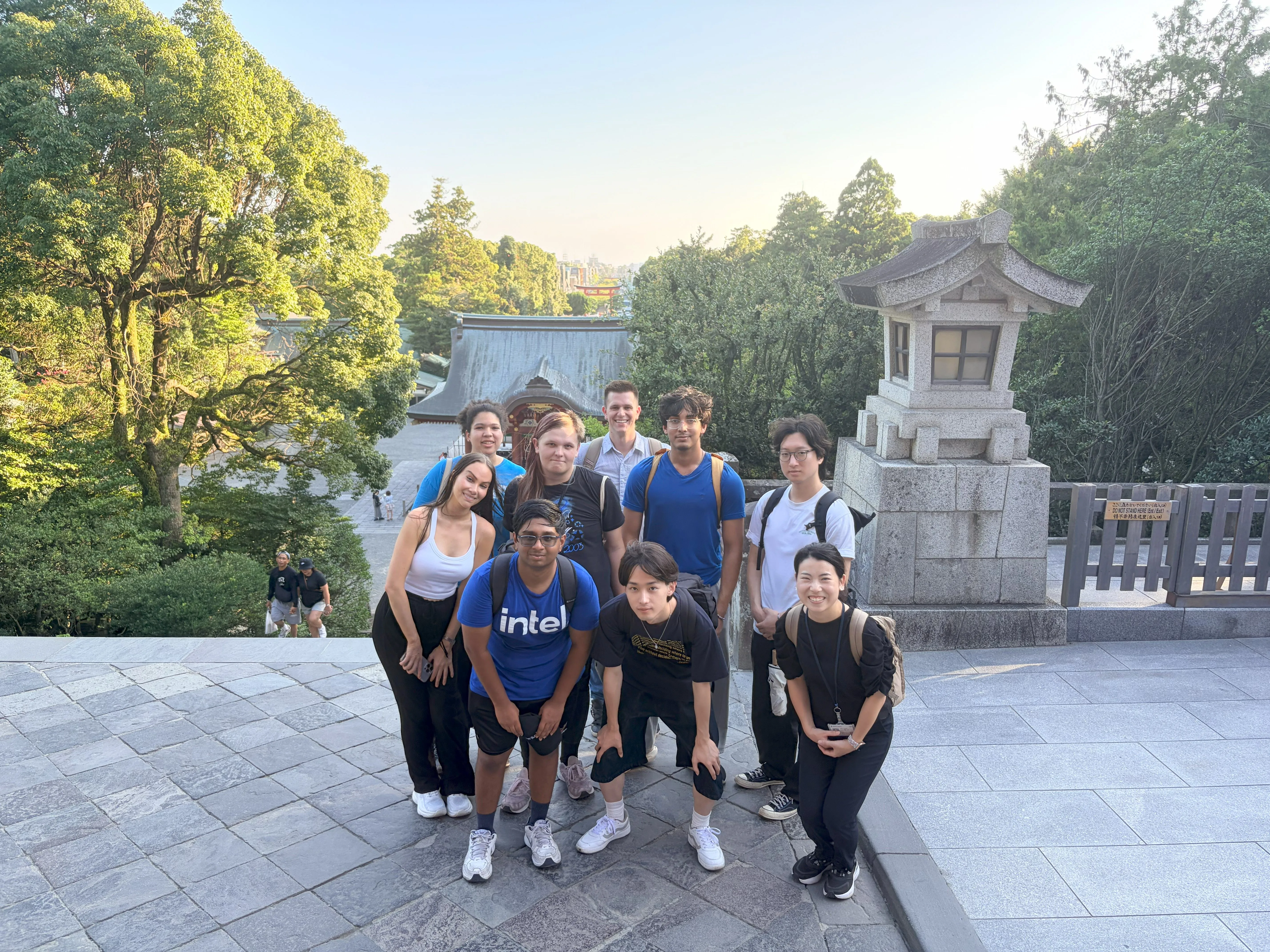
After the tea ceremony experience, participants toured representative temples and shrines in Kamakura. By encountering historic architecture, traditional gardens, and cultural assets, they further deepened their understanding of Japan's history and spiritual traditions.
Final Presentations & Closing Ceremony: Summarizing an eight-day journey
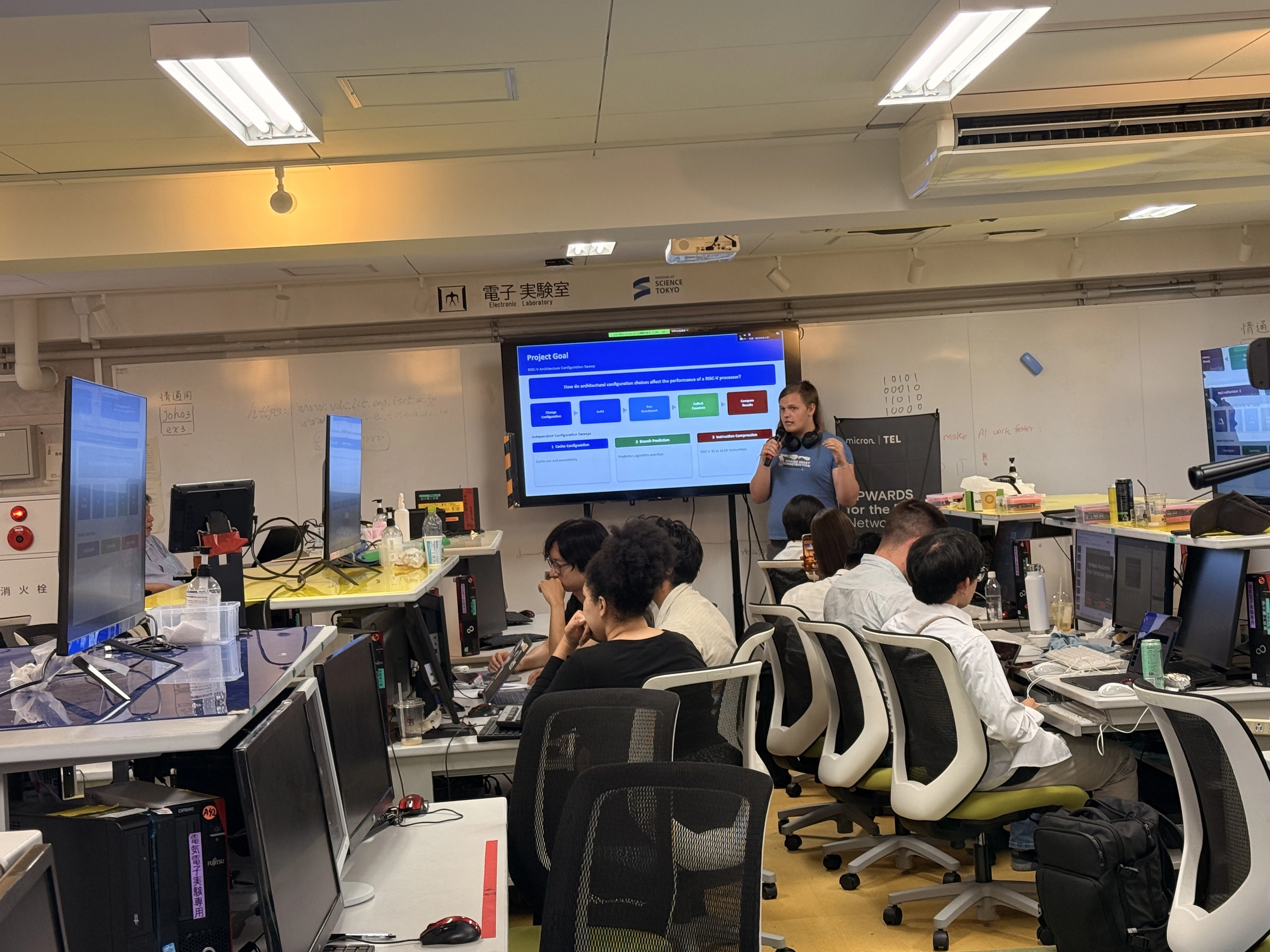
On August 28, the closing day of the program, a final presentation ceremony took place. Student groups delivered presentations detailing their project work and learning achievements over the eight days. Students without specialized backgrounds in semiconductors successfully advanced their knowledge through practical exercises and study resources, enhancing their comprehension of microprocessors and AI chip design.
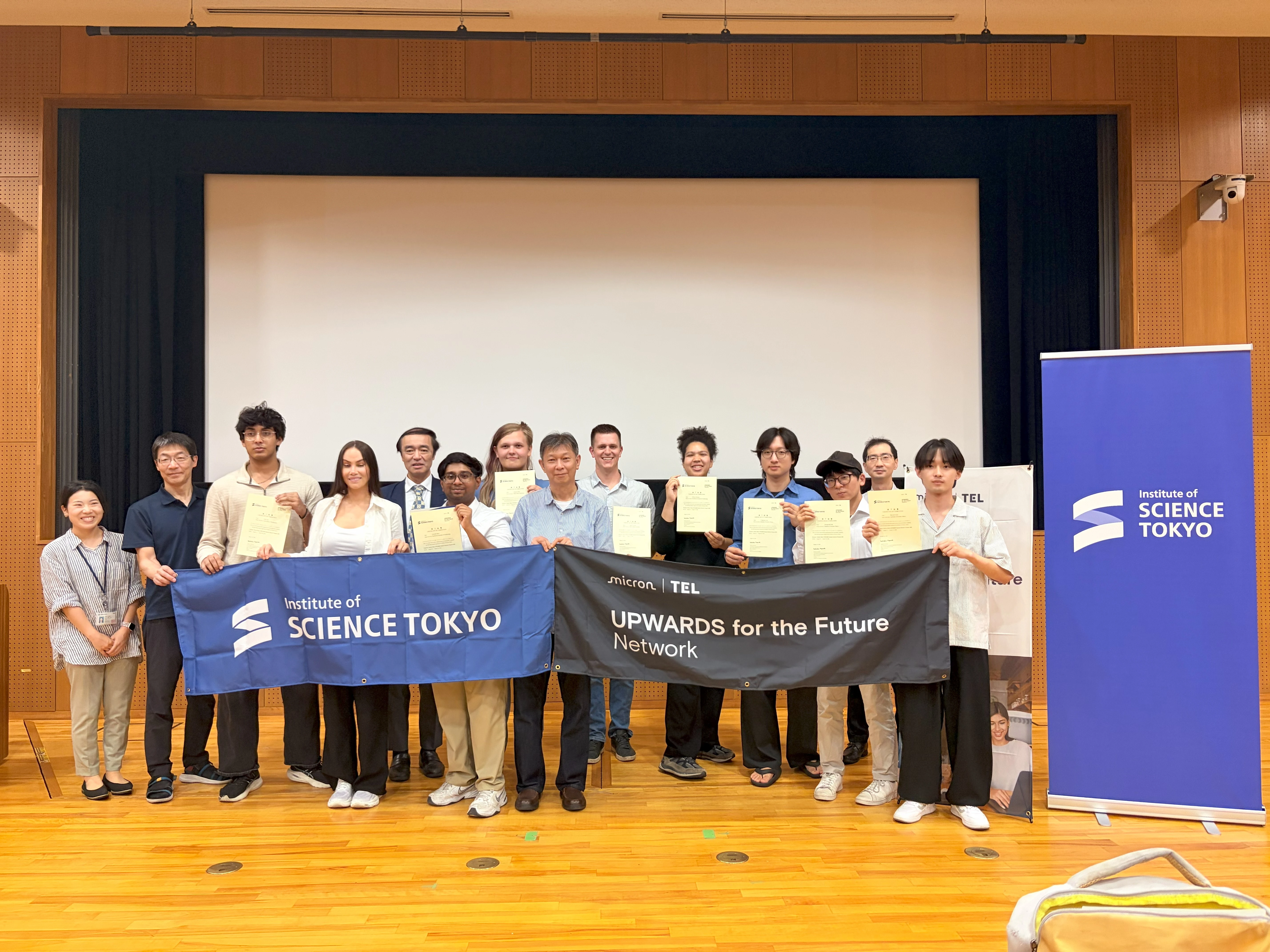
Upon the conclusion of the presentations, Vice President for International Engagement and Education Nobuhiro Hayashi awarded certificates of completion to all nine participants. The students' expressions clearly conveyed a deep sense of achievement and satisfaction in completing the program.
Comment from Prof. Tsuyoshi Isshiki
During this program, students gained hands-on experience navigating the end-to-end development cycle from software specification to hardware implementation using RISC-V microprocessors and our proprietary C2RTL platform.
Since this was our inaugural microprocessor laboratory session, the preparation involved a degree of trial and error, revealing various technical and operational points for optimization. Fortunately, we received insightful feedback and suggestions from the participants, which will enable us to refine and expand the curriculum for upcoming cohorts.
For students without prior specialization in semiconductor engineering or processor architecture, mastering these concepts and realizing working projects in a condensed timeframe was a formidable challenge. Nonetheless, I am delighted by how the students from Japan and the United States assisted one another, deliberated together, and ultimately presented their respective achievements.
Driven by the rapid growth of AI technology, holistic hardware-software co-design—encompassing processors and specialized AI accelerators alongside software systems—will become paramount. It is my sincere hope that C2RTL serves as an entry point into this domain and encourages students to develop next-generation technologies in the semiconductor and AI sectors.
Comments from the Participants
Abir Lal (2nd-year undergraduate, University of Washington)
We developed a comprehensive understanding of system design concepts, including CPU–accelerator connectivity hierarchies and FPGA implementation, while acquiring hands-on methodologies such as modern AI-leveraged coding and JPEG compression techniques. Beyond enhancing our specialized knowledge through project research, engaging with colleagues from varied cultural and academic backgrounds gave us many rich, diverse insights, which will be helpful to us going forward.
Isaac Christopher Livesay (4th-year undergraduate, Boise State University)
I learned about the valuable ability to turn C code into RTL (Register Transfer Level) and the massive benefits this accelerated hardware can give to niche projects.
Ryoichi Kato (3rd-year undergraduate, Science Tokyo, School of Material and Chemical Technology)
The opportunity to design system architectures in C++ and perform simulations, as well as study computer science outside my primary academic specialization, proved to be an invaluable experience. Acquiring new technical knowledge strictly in English and utilizing it within a collaborative project cultivated my problem-solving resilience and self-confidence. Furthermore, establishing a professional network with international colleagues served as a powerful source of motivation.
Lim Chaehyun (2nd-year master’s, Science Tokyo, School of Environment and Society)
I learned C2RTL, which enables AI software to wire directly into hardware language. Working with students from the U.S. also enhanced my global communication competency.
About UPWARDS for the Future
UPWARDS (University Partnership for Workforce Advancement and Research & Development in Semiconductors) for the Future represents a collaborative U.S.–Japan industry-academia partnership dedicated to accelerating talent cultivation and R&D aimed at achieving a better future through semiconductor technology. The program comprises Micron, the U.S. National Science Foundation (NSF), Tokyo Electron, and 11 participating universities from Japan and the U.S.
| Partner University/Institutions in Japan | Hiroshima University, Institute of Science Tokyo, Kyushu University, Nagoya University, and Tohoku University. |
|---|---|
| Partner University/Institutions in the U.S. | Boise State University, Purdue University, Rensselaer Polytechnic Institute, Rochester Institute of Technology, University of Washington, and Virginia Tech. |
Through the UPWARDS for the Future initiative, Science Tokyo remains committed to promoting next-generation semiconductor workforce development and R&D. Furthermore, by fostering interdisciplinary synergies, the university aims to contribute to the establishment of a vibrant U.S.–Japan semiconductor human resource ecosystem.